


Marine bacteria have suggested a way to precisely modify fucoidans in order to control their anticoagulant activity
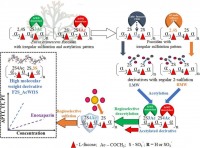
Scientists at the PIBOC FEB RAS, have characterized two novel enzymes, AcWf1 and AcWf2, from the marine bacterium Wenyingzhuangia fucanilytica CZ1127T. These enzymes selectively remove acetyl groups from fucoidans and have enabled a new approach to the targeted modification of these polysaccharides.
Fucoidans are sulfated, often acetylated polysaccharides from brown algae. Their biological activity depends strongly on the types and positions of chemical groups along the carbohydrate chain. However, options for the selective, regioselective modification of such polymers have remained limited. The researchers therefore focused on enzymes involved in fucoidan degradation by marine bacteria.
AcWf1 and AcWf2 belong to different hydrolase superfamilies, but both act on α-(1→3;1→4)-L-fucoidans. Their specificities differ: AcWf1 preferentially removes 3-O-acetyl groups, whereas AcWf2 preferentially removes 4-O-acetyl groups and displays broader specificity toward chemically O-acetylated, 2-sulfated derivatives. This regioselectivity enabled the researchers to develop a new chemoenzymatic strategy for fucoidan modification. First, the polysaccharide is chemically acetylated; then, one of the enzymes selectively removes acetyl groups at defined positions; finally, the newly exposed hydroxyl groups are sulfated. The approach yields derivatives with different, yet controlled, acetylation and sulfation patterns.
As a proof of concept, the researchers applied this strategy to a fucoidan from Fucus evanescens and to low-molecular-weight fucoidan oligosaccharides. The most pronounced effect was observed for the high-molecular-weight derivative F2S_AcWf1S, which contains predominantly 4-O-acetylated and 2,3-di-O-sulfated fucose residues. In laboratory assays using human blood plasma, this derivative showed higher anticoagulant activity than enoxaparin: 3.0-fold and 5.2-fold lower concentrations were required to double clotting time in the activated partial thromboplastin time (APTT) and thrombin time (TT) assays, respectively. Prothrombin time (PT) was doubled at a concentration of 18.32 μg/mL. Before sulfation, acetylation of the fucoidan derivatives mainly enhanced activity in the intrinsic coagulation pathway, as reflected by prolonged APTT, while its effects on TT and PT were minimal.
The study is important in two respects. First, it demonstrates that fucoidan deacetylases can exhibit pronounced regioselectivity, making them useful molecular tools for the precise remodeling of complex polysaccharides. Second, the results show that the anticoagulant properties of fucoidans depend not only on the degree of sulfation but also on the relative arrangement of acetyl and sulfate groups. Although the findings are based on in vitro laboratory experiments, this approach opens the way to structurally defined fucoidan derivatives and to a more systematic understanding of how the substitution pattern of a polysaccharide affects its biological activity.
The results were published in the Carbohydrate Polymers.