


Scientists have discovered a substance in grapes that could halt Parkinson's disease
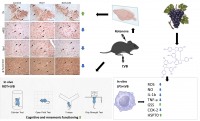
Researchers from the PIBOC FEB RAS and the NSCMB FEB RAS have discovered that a natural compound found in "Alpha" grapes can protect nerve cells from dying in cases of Parkinson's disease. In experiments involving mice, the substance, named trans-vitisin B, not only improved motor function but also restored memory, all without causing the side effects typically associated with standard therapies.
Parkinson's disease is the second most common neurodegenerative disorder after Alzheimer's disease. It develops when dopamine-producing neurons begin to die off en masse in a specific region of the brain known as the substantia nigra. Without dopamine, the brain loses its ability to control movement, leading to symptoms such as tremors, stiffness, and slowness. However, the problem extends beyond motor function; over time, patients may develop cognitive impairments, depression, and dementia.
Current treatments, such as the drug levodopa (L-DOPA), offer only temporary symptom relief by substituting for the missing dopamine. They do not halt neuronal death and eventually lose their effectiveness, while also causing severe side effects, including involuntary movements known as dyskinesias.
For this reason, scientists worldwide are searching for substances that can target the underlying causes of the disease rather than just its symptoms. It turns out that a promising candidate may be found in ordinary grapes.
The research team focused on a compound called trans-vitisin B (tVB). It is an oligomeric stilbene‒a complex molecule composed of four linked resveratrol molecules. While resveratrol has long been known for its antioxidant properties, its tetrameric form proved to be far more effective. In laboratory experiments, scientists tested the effects of tVB on microglia ‒ brain immune cells that shift into an aggressive state during Parkinson's disease and begin attacking neurons by releasing pro-inflammatory substances and reactive oxygen species. It was found that even at very low concentrations (0.1-10 micromolar), trans-vitisin B suppressed the production of the inflammatory cytokines IL-1β and TNF-α by 77% and 11%, respectively. It also reduced levels of nitric oxide and reactive oxygen species, which damage cell membranes and mitochondria.
However, the most interesting findings emerged when the researchers moved from cell cultures to living organisms. Trans-vitisin B demonstrated impressive results in a mouse model of Parkinson's disease induced by the neurotoxin rotenone.
The mice were divided into four groups: a control group, a group receiving only rotenone, a group receiving rotenone and tVB, and a group receiving rotenone and levodopa for comparison. The animals were administered rotenone subcutaneously for 14 days, followed by a 14-day treatment period during which they received either tVB (1 mg/kg) or levodopa (10 mg/kg).
Behavioral tests revealed that mice treated with rotenone became lethargic, frequently froze in place for extended periods, performed poorly in maze navigation, and rarely attempted to rear up on their hind legs. However, the situation changed dramatically for animals treated with tVB: they reared up three times more often in the "cylinder test," showed almost no signs of the pathological sluggishness observed in the open-field test, and regained spatial memory in the Y-maze.
Notably, unlike levodopa, tVB did not cause a reduction in muscle strength. Mice receiving standard therapy experienced a 14% drop in grip strength, likely due to the development of dyskinesia, whereas this metric remained comparable to that of healthy controls in the tVB-treated group. This is a crucial observation: levodopa acts like a crutch, temporarily compensating for dopamine deficiency while disrupting natural movement mechanisms. Trans-vitisin B (tVB) appears to work differently ‒ by actually restoring the neurons themselves.
Researchers examined the mice's brains and found evidence supporting this hypothesis. In the substantia nigra of rotenone-treated animals, the number of dopamine neurons (identified by the marker tyrosine hydroxylase) had decreased by 36.5%. Following the tVB treatment course, this figure recovered by 22%, indicating neuronal preservation. Levodopa, by contrast, had no effect on cell survival; it merely stimulated the remaining neurons to work more actively.
The protective effect of tVB extended beyond this, however. Scientists discovered that the compound suppresses the activation of microglia ‒ cells responsible for neuroinflammation. In the rotenone group, the number of activated microglial cells (marked by IBA-1) rose by 39%, whereas tVB treatment reduced this figure by 30%. Furthermore, tVB reduced the number of neurons producing neuronal NO synthase ‒ an enzyme that generates nitric oxide and damages mitochondria.
One of the most unexpected findings concerned the tau protein, which is typically associated with Alzheimer's disease. It turns out that in Parkinson's disease, pathological forms of phosphorylated tau protein also accumulate in the substantia nigra, forming neurofibrillary tangles. In the rotenone-treated group, the number of such tangles increased by 58%, whereas tVB reduced their count by 24%. Levodopa demonstrated an even greater effect ‒ a 35% reduction ‒ but unlike tVB, it did not protect the neurons.
How exactly does trans-vitisin B protect cells? Scientists hypothesized that the heat shock protein HSP70 plays a key role; it is a molecular chaperone that assists other proteins in folding correctly and prevents their aggregation. In microglial cells treated with the pro-inflammatory factor LPS, HSP70 levels dropped by 20%, but the addition of tVB restored them by 62%. This indicates that tVB helps cells maintain "protein order" ‒ or proteostasis ‒ the disruption of which is considered a primary cause of neurodegeneration.
Overall, the researchers identified five key mechanisms of action for trans-vitisin B: suppression of neuroinflammation, reduction of oxidative stress, protection of dopaminergic neurons, prevention of pathological tau protein aggregation, and restoration of chaperone function. And all this was achieved without the side effects associated with levodopa.
Of course, clinical application is still a long way off. The researchers themselves acknowledge the limitations of their study: the substance was tested at only one dosage and on a single mouse strain, and its ability to cross the blood-brain barrier remains in question ‒ the molecular mass of tVB is quite high (approximately 907 g/mol). However, the fact that tVB administration led to changes in the brain suggests that at least some of the substance reaches its target. It is possible that the chronic inflammation associated with Parkinson’s disease increases the barrier's permeability, or that other delivery mechanisms are at play.
Nevertheless, these findings open up a new avenue in the search for Parkinson’s disease therapies. Instead of merely combating symptoms, it may be worth targeting fundamental cellular defense mechanisms using natural compounds. Grape-derived *trans*-vitisin B is one such candidate.
Future work will involve studies using other models, as well as investigations into dosage regimens and biodistribution ‒ followed, if successful, by the long road to clinical trials. Yet, it is already clear that nature may hold the key to treating diseases we have long regarded as inevitable companions of aging.
The results have been published in the Antioxidants.