


A study of structurally modified fucoidans revealed cell-specific mechanisms of antitumor action
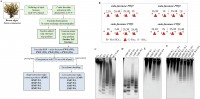
A team of researchers from the PIBOC FEB RAS, published a study systematically examining the relationship between the antitumor activity of Fucus evanescens fucoidan (FeF) and its molecular weight and sulfation pattern. Fucoidans, sulfated polysaccharides from brown algae, have long attracted attention in oncopharmacology due to their low cytotoxicity to normal cells and their ability to inhibit tumor proliferation and metastasis. However, the heterogeneity of natural fucoidans and the complexity of their structural analysis have long hampered the identification of specific determinants of biological activity, and conflicting data in the literature ‒ variable effects depending on the source and method of sample preparation ‒ only exacerbated the problem.
To overcome this limitation, the authors used a set of recombinant GH107 family endo-fucanases with varying substrate specificities for sulfated sites of the α-L-fucopyranose backbone. Enzymatic hydrolysis of native fucoidan FeF yielded two series of derivatives: high-molecular-weight fractions (HMP) with molecular weights ranging from 66 to 187 kDa and low-molecular-weight oligosaccharide fractions (LMP) with degrees of polymerization ranging from 2 to 12 units and molecular weights of approximately 1.4–2.5 kDa. Importantly, the products differed not only in chain length but also in the content and positioning of sulfate groups, specifically the proportion of 2,4-di-O-sulfated residues, quantified using NMR spectroscopy. This approach enabled the first isolation of a set of structurally characterized derivatives with controlled modifications from a single starting polymer.
Biological activity screening was performed on five human cancer cell lines representing various histogenetic types: MCF-7 (ductal adenocarcinoma of the breast), MDA-MB-231 (triple-negative breast cancer), DLD-1 (colon adenocarcinoma), HuTu-80 (duodenal adenocarcinoma), and SK-MEL-28 (melanoma). All samples demonstrated low cytotoxicity even at a concentration of 800 μg/mL (cell death did not exceed 18%). However, in the soft agar colony formation test, a model more relevant for assessing malignant potential, significant and strictly cell-specific differences were observed.
For the MCF-7 and DLD-1 cell lines, native high-molecular-weight fucoidan provided maximum colony growth suppression (a 40–50% reduction), while low-molecular-weight fractions were virtually inactive. This indicates that for these tumor types, the critical factor is the length of the polymer chain, possibly determining the multivalence of interaction with membrane receptors. In contrast, for MDA-MB-231, SK-MEL-28, and HuTu-80, activity increased with decreasing molecular weight and increasing sulfation. In particular, the HMP-W4 and LMP-W3 fractions, enriched in (3)-α-L-Fucp2,4S residues, inhibited melanoma colony formation 37–41% more effectively than the original polymer. Moreover, for melanoma, the presence of 2,4-disulfate groups proved to be the determining factor, while the overall sulfation level did not correlate with activity.
Special attention was paid to the influence of epidermal growth factor (EGF), which mimics the signaling profile characteristic of aggressive tumors. Stimulation with EGF led to changes in the sensitivity of cell lines to individual fractions. For example, in MCF-7 cells, which in the absence of EGF responded only to native fucoidan, the HMP-W4 fraction demonstrated the greatest efficacy after activation of the EGF receptor. Thus, exogenous signals can shift the preference for structural motifs, which should be taken into account when modeling therapeutic action.
In a chemoprevention model of EGF-induced transformation of normal epidermal JB6 C141 cells, certain HMP and LMP derivatives inhibited colony growth by 84–97%, while native fucoidan inhibited colony growth by only 59%. Optimal efficacy was achieved with a molecular weight in the 5–150 kDa range and a 2,4-disulfate content above 13%. These data demonstrate the potential of enzymatically modified fucoidans as agents that inhibit the initiation of neoplastic changes.
Overall, this study demonstrates that the structural heterogeneity of F. evanescens fucoidan conceals an ordered domain organization that can only be revealed using selective endo-fucoidanases. The resulting derivatives with specific sulfate patterns enable differentiated action on various tumor cell types, and the cell-specific response, additionally modulated by growth factors, opens new prospects for the design of targeted anticancer drugs based on natural polysaccharides.
The results were published in the International Journal of Biological Macromolecules.