


An ordinary atom, an unusual effect: how bromination helps fight bacteria
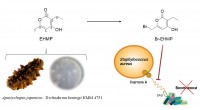
Scientists at the PIBOC FEB RAS have discovered a way to transform a low-active natural compound into an effective agent against bacterial biofilms. The starting material was 3-ethyl-4-hydroxy-6-methyl-2H-pyran-2-one (EHMP), a byproduct of the fungus Trichoderma koningii, which inhabited the intestines of the sea cucumber Apostichopus japonicus.
On its own, EHMP only weakly inhibited bacterial growth, while significantly hindered the formation of Candida albicans yeast biofilms. However, after a simple chemical manipulation ‒ the addition of a bromine atom ‒ the substance properties changed dramatically. The new compound, named Br-EHMP, virtually lost its activity against C. albicans, but became significantly more effective against biofilms of Staphylococcus aureus.
Of particular interest is the compound's mechanism of action. The researchers found that Br-EHMP inhibits the activity of the enzyme sortase A, a molecular "construction machine" that enables staphylococci to form biofilms and adhere to surfaces. Without the activity of this enzyme, the bacteria lose their ability to establish protective communities, making them more vulnerable. Computer modeling revealed an interaction between the bromine atom in the Br-EHMP molecule and the key amino acid residue Cys184 in the active site of sortase A, resulting in inhibition of the enzyme's activity.
Importantly, even at high concentrations, Br-EHMP is almost nontoxic to normal mammalian cells (the H9c2 cardiomyocyte cell line was used in the experiments), making it a promising candidate for further research as an antibiofilm agent.
Staphylococcal biofilms are one of the main problems in modern medicine: they cause chronic wound infections, pneumonia, complications during prosthetic implantation, and are resistant to many antibiotics. The discovery demonstrates that bromination of natural compounds could be a simple and effective way to create new antimicrobial drugs aimed not at killing bacteria, but at blocking their "social" behavior.
The results were published in the Antibiotics.