


New marine microbe can "switch on" motility thanks to a plasmid
A new alphaproteobacterium has been discovered in the Sea of Okhotsk: some strains can "travel" while others cannot.
Scientists from the PIBOC FEB RAS isolated two new bacteria from bottom sediments. In collaboration with scientists from the NSCMB FEB RAS, they described them as a new species, Marinovum sedimenti, adding a second species to the genus Marinovum besides Marinovum algicola. The novel strains showed an unexpected distinction. One strain (KMM 9879) was motile and had one or two flagella located laterally or at the cell poles. The second strain, the type KMM 9989T, did not possess these capabilities.
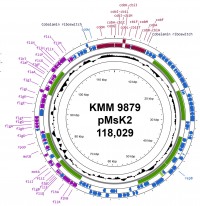
The secret was in its genetics. The motile strain carried a complete gene cluster responsible for flagellar assembly on an extrachromosomal element—a plasmid, which the scientists classified as a "chromid." The non-motile strain lacked this cluster. This is a rare case where a single small genetic element remarkably alters a bacterium's lifestyle, enabling it to actively move.
In addition to strain-specific motility, the new species is distinguished by its preferences for temperature, salinity, and the range of nutrients. The bacteria can grow at 5-35°C in water with a salt content of 0.5 to 4% and a pH of 5.5 to 10.0.
This discovery not only expands our understanding of the microbial diversity of the oceans but also helps scientists better understand the role of horizontal gene transfer in the adaptive capacity of some marine bacterial strains due to the acquisition of "tools" for movement.
The name of the new species has been validated by the International Committee on Taxonomy of Prokaryotes (Validation List no 229).
The results are published in the journal Microorganisms.