


A marine fungus from the shores of Vietnam has provided scientists with a promising compound
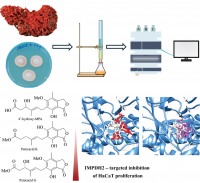
An international team of researchers from Russia and Vietnam has discovered a compound in the marine fungus Penicillium sp., isolated from the sponge Cinachyrella sp. from Nha Trang Bay, that is capable of selectively inhibiting the growth of tumor cells. From the fungal extract, scientists isolated three derivatives of mycophenolic acid – a well-known immunosuppressant. One of these, penicacid K, has been obtained from a natural source for the first time; previously, it had only been described as an intermediate product of synthesis. However, primary attention was drawn to another compound, penicacid G. In experiments with normal human skin cells (keratinocytes), it moderately suppressed cell division and reduced viability. But in earlier experiments by other researchers, penicacid G was found to be dozens of times more toxic to tumor cells of various lines – the half-maximal inhibitory concentrations ranged from 1 to 13 μM.
Molecular modeling showed that both penicacid G and penicacid K are able to bind with the enzyme IMPDH2 – the same target through which the classic drug mycophenolic acid operates. Apparently, small differences in structure make penicacid G a much more effective blocker of cancer cell division compared to normal cells.
The researchers note that penicacid G has good "drug-likeness": it does not penetrate the blood-brain barrier, but can be absorbed in the gastrointestinal tract and meets Lipinski’s rules. This makes it a promising candidate for further development as a selective antiproliferative anticancer agent.
The study also confirmed that the extract of the fungus itself contains a variety of biologically active compounds, including the mycotoxin beauvericin and antibiotic-like substances, which explains its previously observed cytotoxicity.
The results are published in the journal Current Bioactive Compounds.