


New details of the mechanism by which marine bacteria process algae have been revealed
Brown algae absorb gigatons of carbon dioxide annually, converting it into complex sugars called fucoidans. These compounds are considered among the most difficult to degrade in the ocean, and they help retain carbon in marine sediments for years. But how do microorganisms break them down?
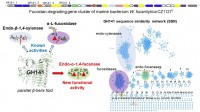
Our colleagues have for the first time thoroughly studied four enzymes of the GH141 family from the bacterium Wenyingzhuangia fucanilytica, a specialist in fucoidan degradation. It was previously assumed that these proteins act as "scissors" to cleave individual fucose molecules, like other known enzymes. But reality turned out to be different.
It turned out that all four enzymes function as endo-fucanases – they cut long fucoidan chains from the inside, producing short sulfated oligosaccharides. Two of them, Wf141_1 and Wf141_2, proved particularly interesting. While superficially similar, they differ in their signature: the former prefers to degrade double-sulfonated sites, while the latter prefers sites with alternating patterns of sulfate groups.
Using modern bioinformatics methods (including sequence similarity network analysis and CUPP clustering), the researchers showed that the proteins they studied form distinct branches on the evolutionary tree of the GH141 family ‒ distant from previously characterized enzymes that process pectin or xylan. This discovery provides new insights into how marine bacteria metabolize algal biomass.
The practical interest in these enzymes extends beyond climate change. Fucoidans exhibit antitumor and anticoagulant activity, and the ability to engineer their fragments with a specific structure opens the way to the development of new drugs. Understanding how bacteria cope with complex natural polymers helps scientists more accurately model the ocean carbon cycle.
According to the authors, the study redefines the role of the GH141 family: they are not accessory "fucosidases". as previously thought, but key players in the degradation of fucoidans. This means that marine bacteria are armed with a much more diverse arsenal of enzymes than previously thought.
The results are published in the International Journal of Molecular Sciences.