


A novel seaweed-based complex has been developed for the treatment of herpes
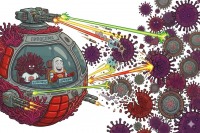
Researchers from the PIBOC FEB RAS, have developed an innovative delivery system for the antiviral drug acyclovir using carrageenans ‒ sulfated polysaccharides isolated from the red algae Chondrus armatus. This combination not only enhances the drug's effect but also allows for a lower dosage, which is especially important given the growing resistance of the herpes virus to existing drugs.
The main problems with acyclovir are its low bioavailability, poor solubility, and the need for frequent, high-dose administration, which leads to toxicity. This new approach addresses these issues: carrageenans form strong complexes with acyclovir through hydrogen and coordination bonds, as confirmed by IR spectroscopy and quantum chemical calculations. The binding energy was found to be approximately 13-20 kcal/mol, ensuring the stability of the complex.
But the most interesting aspect lies in the synergistic action. While acyclovir itself doesn't prevent viral attachment to cells but merely blocks its replication, carrageenan effectively inhibits viral adsorption. Together, they attack herpes at various stages of infection. In experiments on Vero cells, the complex demonstrated a prophylactic effect unmatched by pure acyclovir, and demonstrated comparable efficacy in treating already infected cells.
The liposomal form of the complex yielded even more impressive results. Liposomes ‒ microscopic vesicles similar to cell membranes ‒ provided excellent mucoadhesion (the ability to adhere to mucous membranes) and high selectivity. The selectivity index, which measures the effectiveness-to-toxicity ratio, reached 344 for treatment and 128 for prevention ‒ significantly higher than the threshold of 100, considered a sign of a wide therapeutic window. Simply put, the new drug effectively suppresses the virus while causing minimal harm to healthy cells. This development is particularly relevant for the treatment of herpes on mucous membranes ‒ for example, genital herpes or oral lesions. Carrageenans are already included in leading global pharmacopoeias as safe excipients, which will accelerate the potential market entry of this new formulation. Scientists are planning further preclinical studies to confirm the potential of the complex as a means of not only treating but also preventing herpesvirus infections.
The results are published in the International Journal of Molecular Sciences.