


How cyclization turns toxic compounds into neuron protectors
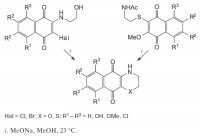
Scientists from the PIBOC FEB RAS modified natural 1,4-naphthoquinones, substances resembling those found in microorganisms and plants. By reaction with ethanolamine or cysteamine and performing cyclization, they obtained tricyclic oxazines and thiazines.
Why is this important? The original "non-cyclic" forms effectively kill HeLa cancer cells and cope with bacteria and fungi. Brominated juglone derivatives demonstrated the strongest antimicrobial properties against Staphylococcus aureus and Candida albicans. However, after cyclization, their cytotoxicity drops sharply, while neuroprotective activity emerges.
In experiments on Neuro-2a neuroblastoma cells, tricyclic structures increased cell survival after paraquat poisoning by 5-14%. This is important for the search for treatments for Parkinson's disease, where oxidative stress plays a key role.
The result: from a single molecular "blank," chemists obtained two targets ‒ antitumor and neuroprotective ‒ by simply varying the degree of cyclization. The new compounds are non-hemolytic (safe for red blood cells) and are as active as some clinical drugs.
The results were published in the Russian Chemical Bulletin.