


Substances capable of protecting heart muscle cells have been discovered in the depths of the Bering Strait
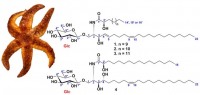
Scientists from the PIBOC FEB RAS have isolated two new cerebrosides, which are complex lipids that play a key role in constructing cell membranes and facilitating intercellular communication, from the polar starfish Leptasteria cerebrosides acervata.
The study demonstrated that these compounds, named leptasteriacerebrosides A and B, have significant cardioprotective properties. In experiments on cardiac muscle cell cultures, leptasteriacerebroside A protected the cells from damage caused by oxygen deprivation. Leptasteriacerebroside B suppressed inflammatory processes in cardiac cells by blocking the NF-κB signaling pathway, which is a key regulator of the immune response.
All isolated compounds also demonstrated high efficacy in inhibiting urease activity. Excessive urease activity in soil leads to the rapid decomposition of nitrogen fertilizers. These results open up the prospect of searching for new medicinal products and agrochemical additives based on natural marine compounds.
Sea stars have long attracted the attention of researchers as a source of unique, biologically active molecules. Adapting to the extreme conditions of cold waters and high pressure, these animals have developed unique survival mechanisms and synthesize compounds not found in terrestrial organisms. Sphingolipids, including the discovered cerebrosides, perform vital functions in sea star cells. They facilitate intercellular recognition and signal transduction and maintain membrane integrity. The structural features of these lipids—the presence of hydroxylated and unsaturated chains—determine their high biological activity.
An analysis of the structure-activity relationship revealed interesting trends. Among compounds with different hydrocarbon chain lengths, efficacy decreased with increasing chain length. Conversely, the presence of an additional hydroxyl group enhanced the protective properties. This subtle structural relationship helps researchers understand the mechanisms of action of natural compounds and opens opportunities for targeting the search for the most promising molecules. However, as the authors note, these observations are preliminary and require verification in future studies.
While developing drugs based on these isolated compounds is still far off, this work significantly contributes to our understanding of the pharmacological potential of deep-sea organisms. The next step is to study the detailed mechanisms of action of the discovered compounds and test their effectiveness in models that more closely resemble living organisms.
These results are published in the Journal of Natural Medicines.