


Seaweed polysaccharides inhibit metastasis
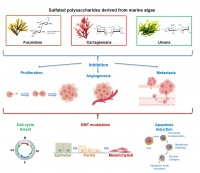
Our colleagues have published an interesting review paper devoted to the search for treatments against the most dangerous aspect of the cancer process – the ability to metastasize. The scientists presented data showing that polysaccharides from brown, red, and green algae – fucoidans, carrageenans, and ulvans – can block one of the most dangerous processes in cancer: epithelial-mesenchymal transition (EMT). EMT is what allows cancer cells to become motile, penetrate blood vessels, and form metastases.
A large number of studies show that fucoidans from brown algae are particularly effective. They "return" aggressive cells to a less dangerous state by increasing levels of the protein E-cadherin (which holds cells together) and reducing markers of invasiveness. These substances suppress key signaling pathways responsible for metastasis, such as TGF-β and Wnt/β-catenin.
Fucoidans not only prevent tumor spread but also address one of the main challenges in modern oncology: therapy resistance. Cells that have undergone EMT often become "invisible" to chemotherapy drugs. Fucoidans, it has been discovered, can restore these cells' vulnerability. For example, in combination with the drug gefitinib, they overcame the resistance of lung cancer cells, enhancing the antitumor effect.
Carrageenans from red algae also exhibit antitumor activity, but their action depends heavily on their structure and molecular weight. Ulvans from green algae primarily work by enhancing the immune response and antioxidant protection.
Importantly, these natural compounds are low-toxic and have already shown promising results in clinical trials as adjuvant agents in chemotherapy, improving treatment tolerance and overall patient well-being.
However, the journey from the laboratory to the clinic requires significant challenges. The most important of these is standardization. The activity of these polysaccharides depends critically on the algae species, collection location, season, and extraction method, resulting in variability in composition. Scientists emphasize that the future lies in creating pharmaceutical substances with a clearly defined structure and molecular weight. Only in this way can a reproducible therapeutic effect be ensured and large-scale clinical trials conducted to definitively prove the benefits of marine glycans in oncology.
The results are published in the journal Advances in Cancer Biology - Metastasis.