


Unusual substances that protect heart and brain cells have been found in a sea sponge
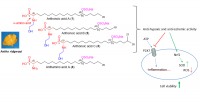
Scientists from the PIBOC FEB RAS, in collaboration with colleagues from the NSCMB FEB RAS, have isolated four new lipid amino acids — anthonic acids A–C and anthamino acid A — from the marine sponge Antho ridgwayi, which was collected in the Bering Sea near Bering Island. Lipoamino acids are rare natural compounds and derivatives of α-amino acids with long alkyl chain substituents. Anthonic acids A–C and anthamino acid A are the first sulfonated lipoamino acids to be discovered. The N-2-hydroxyethyl moiety in anthonic acids A–C has not previously been detected in lipidic amino acids either. Anthonic acid A is likely to be a precursor of anthonic acids, as it contains a free amino group without an N-2-hydroxyethyl substituent.
In laboratory experiments, anthonic acids A–C demonstrated a pronounced cytoprotective effect. At very low concentrations (1 μM), they protected H9c2 and SH-SY5Y cells from damage in bioassays simulating hypoxia induced by the addition of cobalt chloride to the medium, as well as damage caused by ischaemia/reperfusion (the sudden cessation and restoration of blood flow).
The proposed mechanism of action of anthonic acids A–C involves reducing the level of reactive oxygen species inside cells by activating the superoxide dismutase enzyme. This process is regulated by the Nrf2 signalling pathway, which is a key pathway for cellular antioxidant defence. However, the compounds did not activate the proinflammatory factor NF-κB.
Furthermore, the substances protected cells from the toxic effects of ATP, a molecule released in large quantities by damaged cells that exacerbates damage by activating P2X7 receptors. Anthoninic acids A–C blocked ATP-induced calcium influx into cells, indicating their ability to inhibit these receptors.
This is the first report of amino acids with this lipid structure that can influence both the Nrf2 antioxidant system and the P2X7-mediated pathway simultaneously. This study could lead to new approaches in the search for drugs to protect the heart and brain from the effects of heart attacks, strokes and other conditions caused by hypoxia.
The results were published in the Molecules.
This work was supported by the Russian Science Foundation (grant no. 23-14-00040).