


Scientists have discovered a new species of marine bacteria - Vibrio chaetopteri
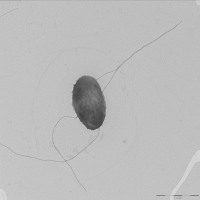
Researchers from PIBOC FEB RAS, in collaboration with scientists from NSCMB FEB RAS, have discovered and described a new species of bacteria of the genus Vibrio, which has been named Vibrio chactopteri. The discovery was made during the study of microorganisms living in the mucus of the digestive network of the marine polychaete worm Chaetopterus cautus, collected in the Troitsa Bay of the Sea of Japan.
The new species belongs to the Mediterranei clade of the genus Vibrio, which includes species often associated with marine organisms such as corals, molluscs and algae. Genome analysis showed that strains CB1-14T (= KMM 8419T) and CB2-10 (KMM 8420) strains of the new species Vibrio chaetopteri are genetically different from already known species: the greatest similarity with their closest relatives is no more than 93.1%, which is below the generally accepted threshold for classification as a single species.

The bacteria have the ability to break down complex polysaccharides such as alginates, xylans and chitins, which are the main components of seaweed and crustacean shells. This indicates their possible role in the processing of organic matter in marine ecosystems.
The discovery adds to our understanding of the diversity of marine bacteria and their adaptation to life in association with invertebrates. The description of the new species is based on a comprehensive approach that includes genomic analysis, study of biochemical properties and metabolic characteristics.
The results are published in the journal Microorganisms.
The work was carried out with financial support from the Russian Ministry of Education and Science. (grant No. 15.BRK.21.0004, agreement No. 075-15-2021-1052/9).