


New phototrophic bacterium living on seaweed discovered
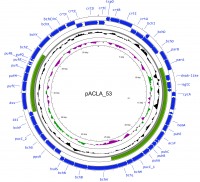
Scientists from PIBOC FEB RAS, together with colleagues from FEFU and NSCMB FEB RAS, have discovered a new species of marine alpha-proteobacteria capable of an unusual form of photosynthesis. The microorganism, named Algirhabdus cladophorae, was discovered on the surface of the green algae Cladophora stimpsonii, collected in Peter the Great Bay in the Sea of Japan.
The bacterium is notable for being an aerobic anoxygenic phototroph. This means that it can use the energy of sunlight for its vital functions, but does not release oxygen, unlike plants and algae. A unique set of genes responsible for this "oxygen-free photosynthesis" was found on a separate plasmid, a small ring-shaped DNA molecule (shown in the figure). This ability probably helps the bacterium survive in conditions of nutrient deficiency.
The study showed that the new microorganism is genetically unique and forms a separate genus in the large Roseobacteriaceae family. The bacteria cells are immobile, rod-shaped and form pink colonies. Seawater is necessary for its growth.
The discovery sheds light on the complex symbiotic relationships between microorganisms and marine algae, and expands our knowledge of the diversity and adaptations of microbial life in the ocean. The new strain has been deposited in the KCTC and KMM international microorganism collections.
The results are published in the journal Life.
The work was carried out with financial support from the Russian Ministry of Education and Science (grant No. 15.BRK.21.0004, agreement No. 075-15-2021-1052/9).