


A substance from brown algae suppresses the development of an aggressive form of breast cancer.
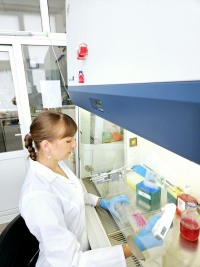
Scientists from PIBOC FEB RAS have discovered a unique compound in the Far Eastern brown algae Costaria costata (costaria) that can block the growth and spread of the most dangerous form of triple-negative breast cancer (TNBC).
These compounds are called florotannins, polyphenolic compounds produced by brown algae. For the first time, researchers have managed to isolate and study the structure of a specific substance in this class – floretol. It turned out to be a large molecule consisting of 12-25 floroglucinol units.
During experiments, floretol showed impressive cancer-preventing and anti-tumor effects on a model of TNBC cells, the most aggressive and treatment-resistant form of this cancer. This compound not only suppressed the viability of cancer cells, but also effectively blocked their ability to form colonies and migrate, i.e., to metastasize.
It is particularly important that floretol prevented the transformation of normal cells into malignant ones under the influence of the carcinogenic agent TPA.
The key to the anti-cancer effect of floretol lies in its ability to influence intracellular signaling. Scientists have found that it suppresses the AKT/GSK-3β/CDKs signaling pathway, which is key to cancer development. As a result, cell cycle regulation is disrupted: the activity of proteins that cause cells to divide uncontrollably (CDK4 and cyclin D1) is reduced, and the level of the “brake” protein p21, which stops this division, is increased.
This discovery offers new hope in the fight against triple-negative breast cancer, an extremely aggressive subtype of tumor for which there is still no effective treatment. Unique compounds derived from marine organisms may form the basis for the first preventive and therapeutic drugs. Now scientists need to study their safety and bioavailability in order to bring the creation of an effective drug closer.
The results are published in the journal Algal Research.